
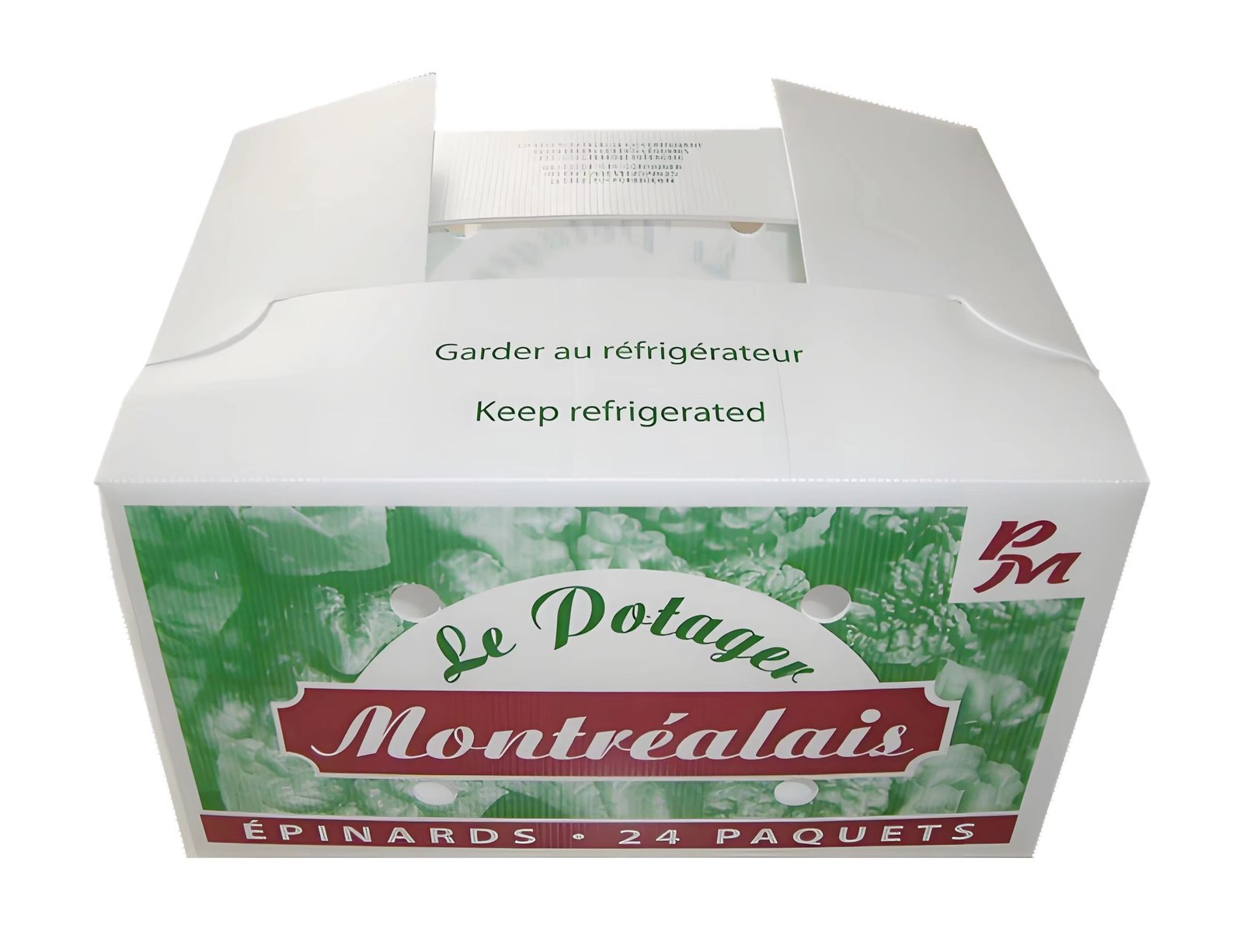
Fuxing Group manufactures both corrugated cardboard cartons and PP (polypropylene) corrugated plastic boxes, so importers often ask us directly: which is cheaper? The honest answer: it depends entirely on whether the box comes back.
For one approved box size, enter current quotations and measured route data:
| Cardboard carton (5-ply) | PP corrugated box (4 mm) | |
|---|---|---|
| Delivered unit price | Current quote: ___ | Current quote: ___ |
| Successful trips | Measured: ___ | Measured: ___ |
| Damage and product loss | Trial result: ___ | Trial result: ___ |
| Return freight & washing | ___ | ___ |
| All-in cost per successful trip | Total ÷ trips: ___ | Total ÷ trips: ___ |
| Wet / cold performance | Condition and test finished carton | Condition and test finished box, joints and pallet |
| End-of-life outlet | Confirm coating and cleanliness with local paper processor | Confirm construction and cleanliness with local PP processor |
Do not use a supplier's generic trip count or break-even claim. Run both approved constructions through the same product, moisture, temperature, pallet, stack time and handling. Record damage, washing, returns, loss and successful trips, then calculate low, base and high cases.
Use returnable PP boxes for the domestic legs (farm → packhouse → export packer), then transfer into printed cardboard cartons for the one-way international leg. You get PP durability where loops exist and cardboard economics where they don't. As a group that makes both under one roof, we can spec the pair so the internal dimensions nest perfectly.
See our PP corrugated box range (2–12 mm, custom sizes, silk-screen printing) and export carton range.
Tell us the loop, volumes and crop — we'll model cardboard vs PP for your case, free.