
Peru shipped 412,239 tonnes of blueberries in 2025 (Fresh Fruit Portal / Agronometrics, preliminary) and Chile starts its season in November. Almost all of that fruit travels in PET clamshells inside corrugated flats, and the classic in-season problem is a clamshell and a flat from two different suppliers that do not fit, or one of them arriving late.
Fuxing Group supplies PET clamshells from a partner thermoforming plant in Dongguan, China, and manufactures the corrugated flat and master carton in its own plants. You send your customer's spec sheet; we match clamshell, flat and pallet pattern and load them in the same container.
Under Peru's and Chile's free trade agreements with China, most plastic packaging enters duty-free with a certificate of origin (confirm with your customs agent).
Which clamshell for export blueberries? The 125 g (4.4 oz) clamshell, 12 per flat (1.5 kg), is the standard for the U.S., Europe and China. For club stores and some retailers: 250 g, 500 g (18 oz) or a twin pack. Check the clamshell footprint against the flat your receiver specifies before you buy. Send the Fuxing code, quantity per season and port for a quote within 12 hours.
The 125 g (4.4 oz) punnet is the export standard for Peruvian and Chilean blueberries, normally packed 12 to a corrugated flat; 250 g and 500 g serve retail and club programmes.
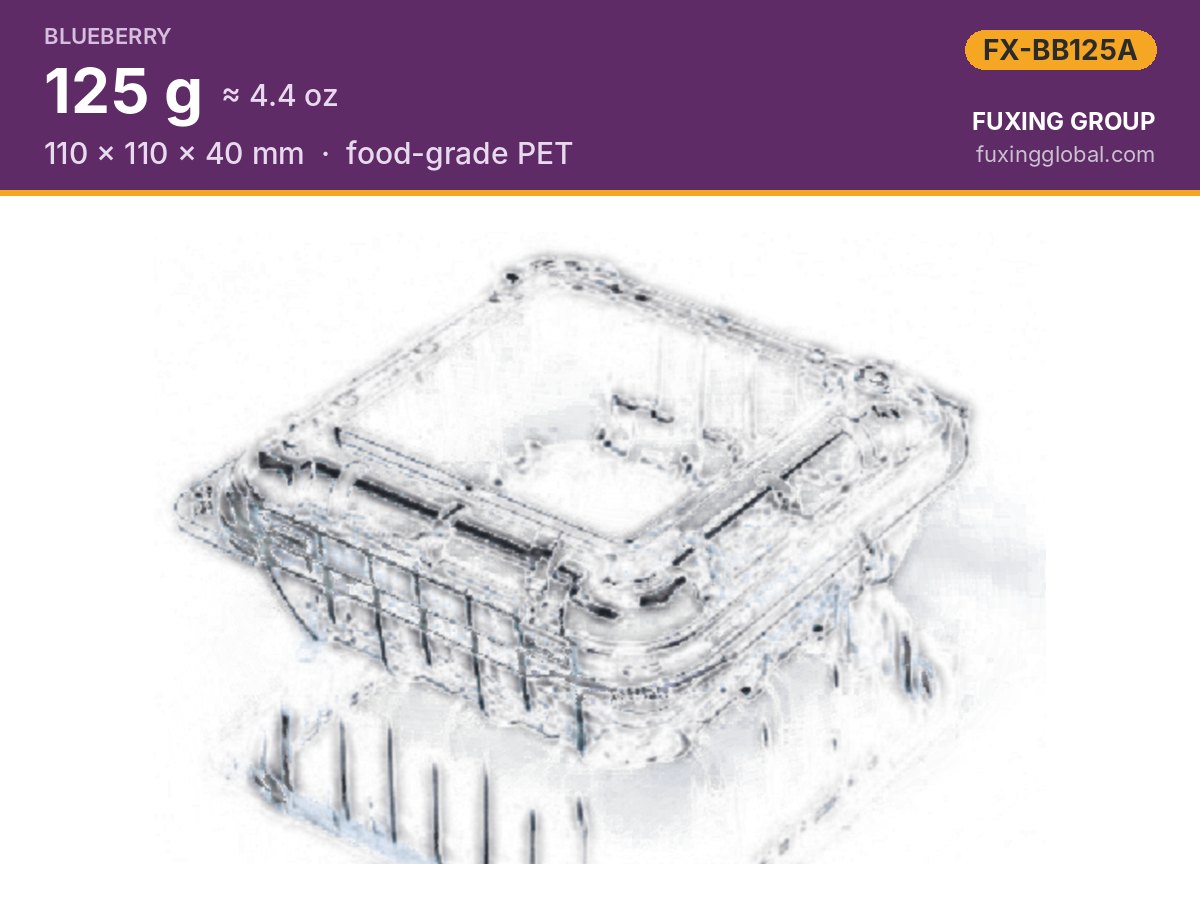
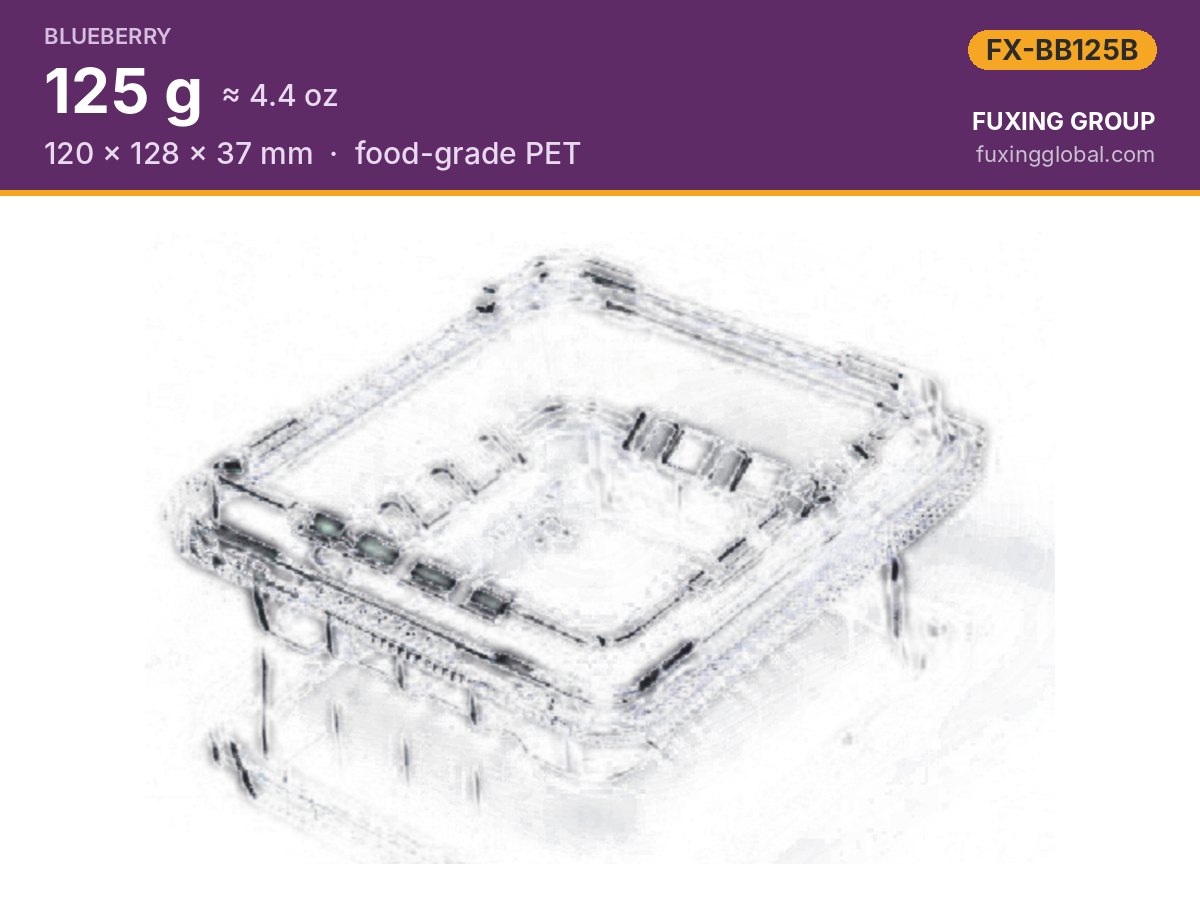
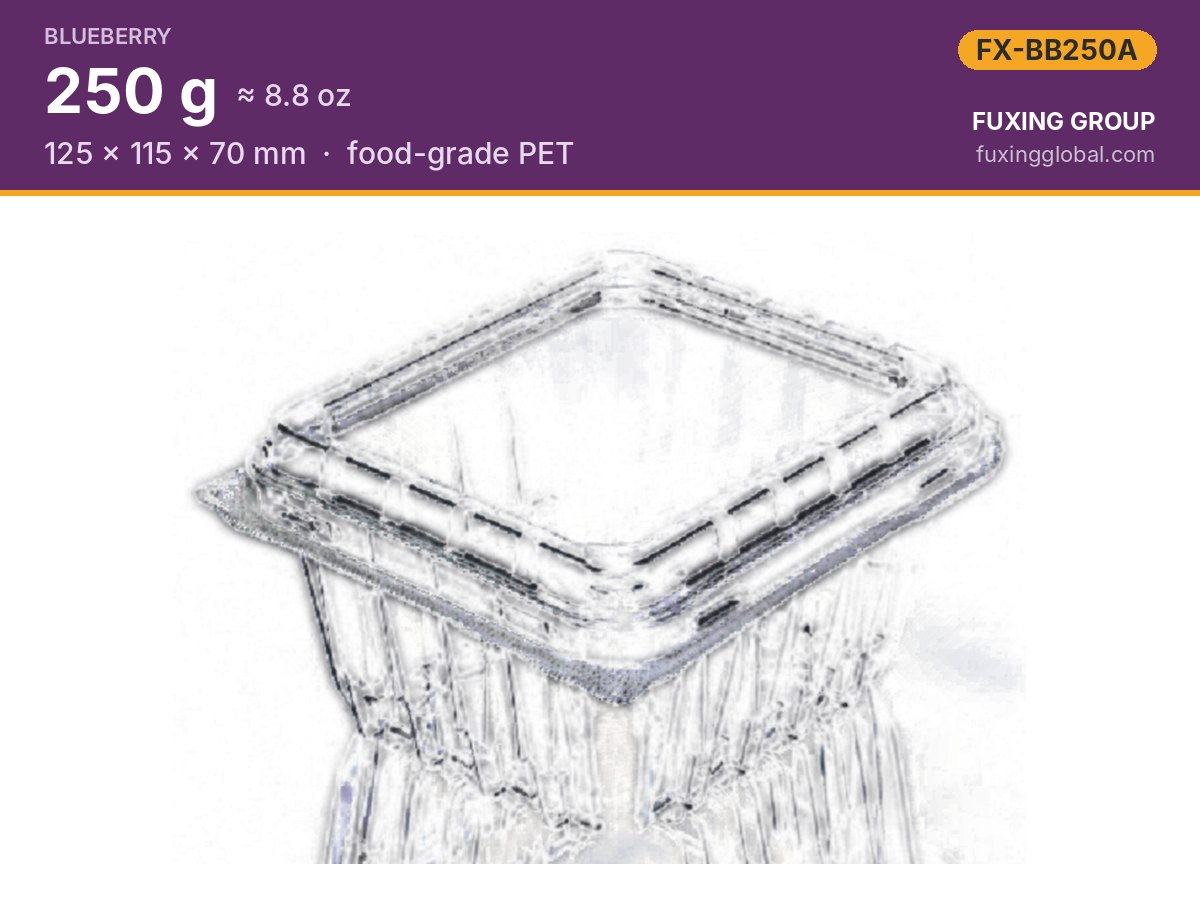
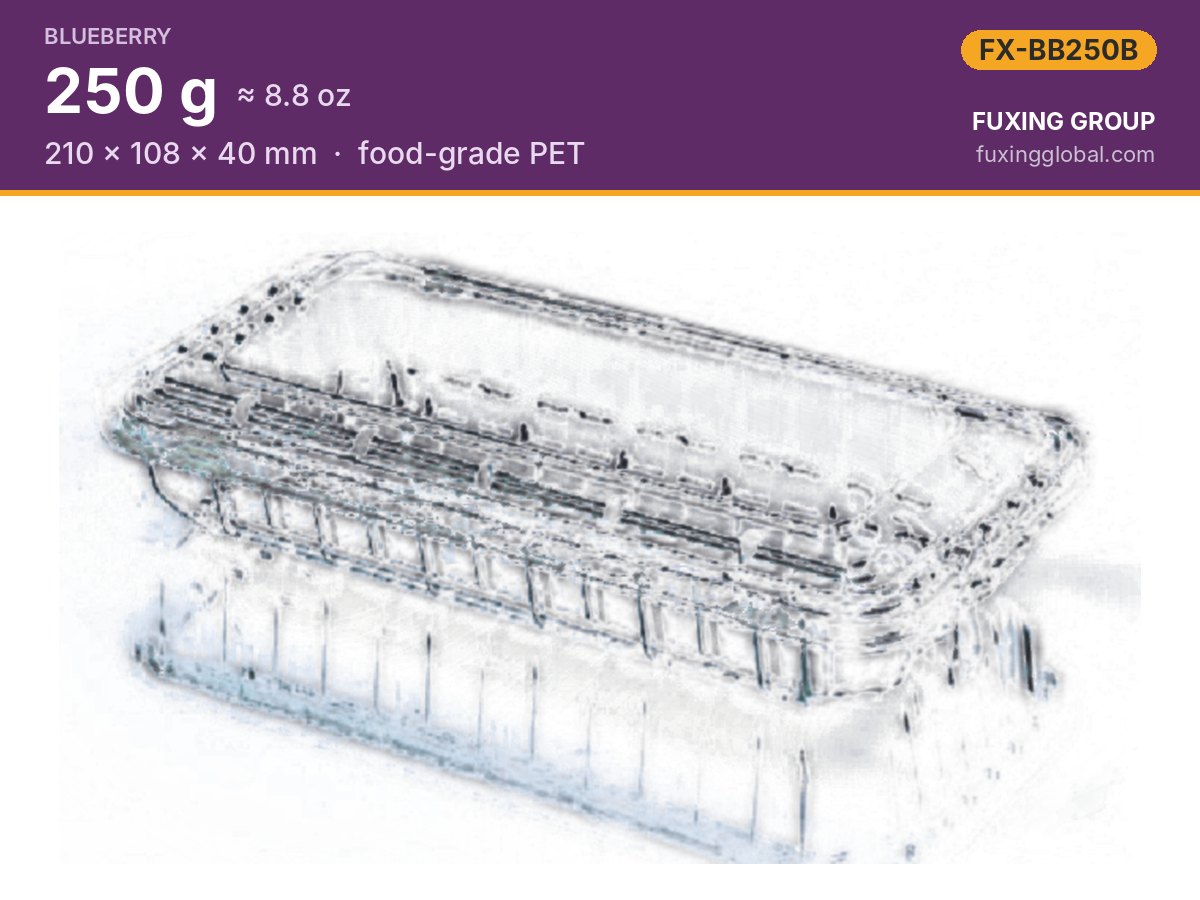
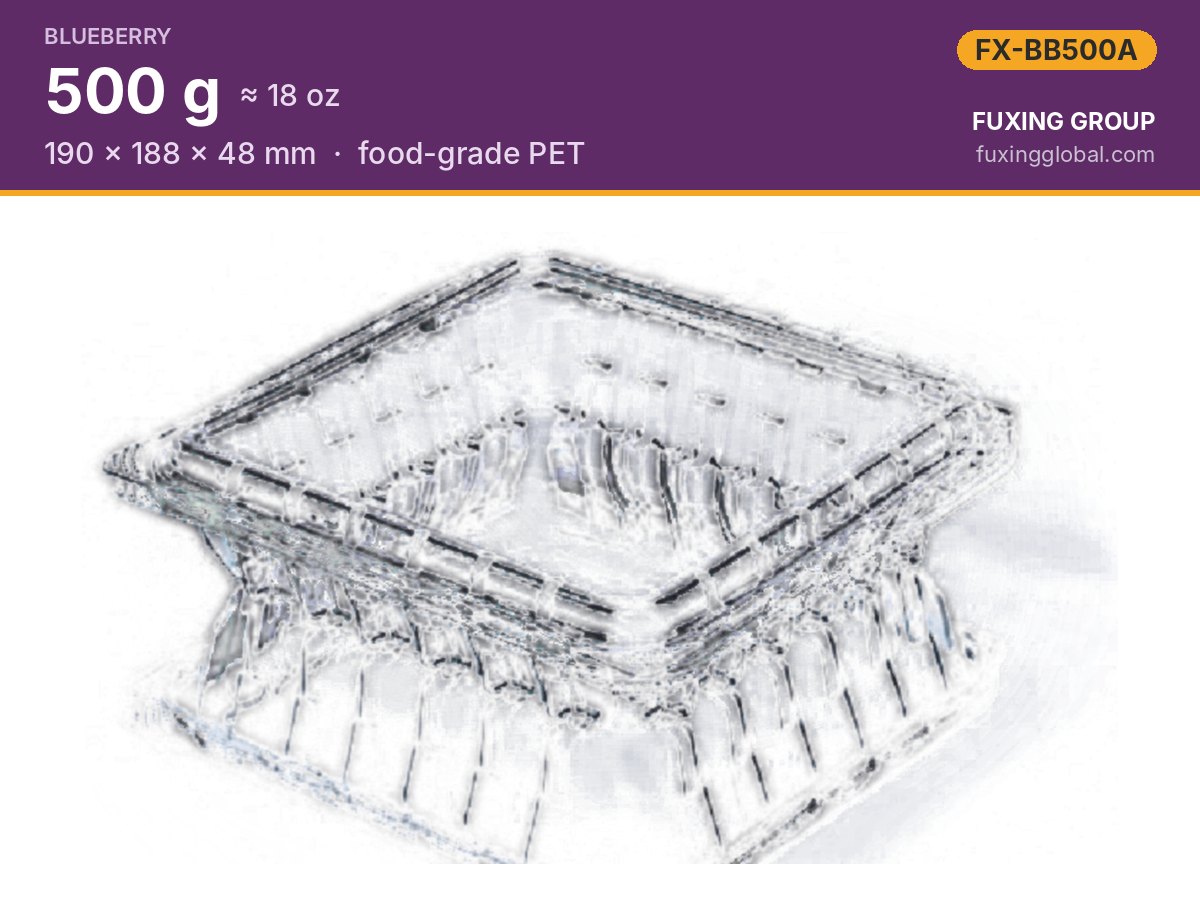
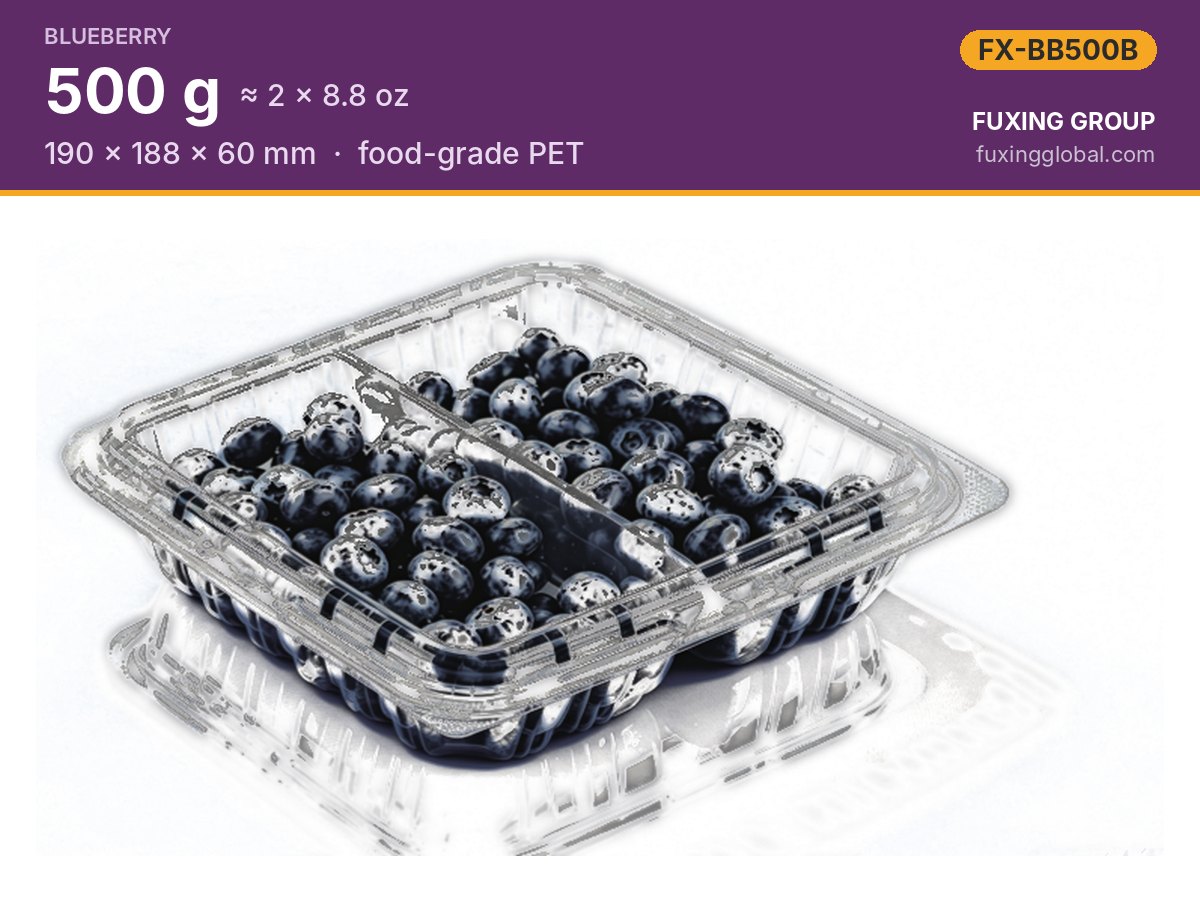
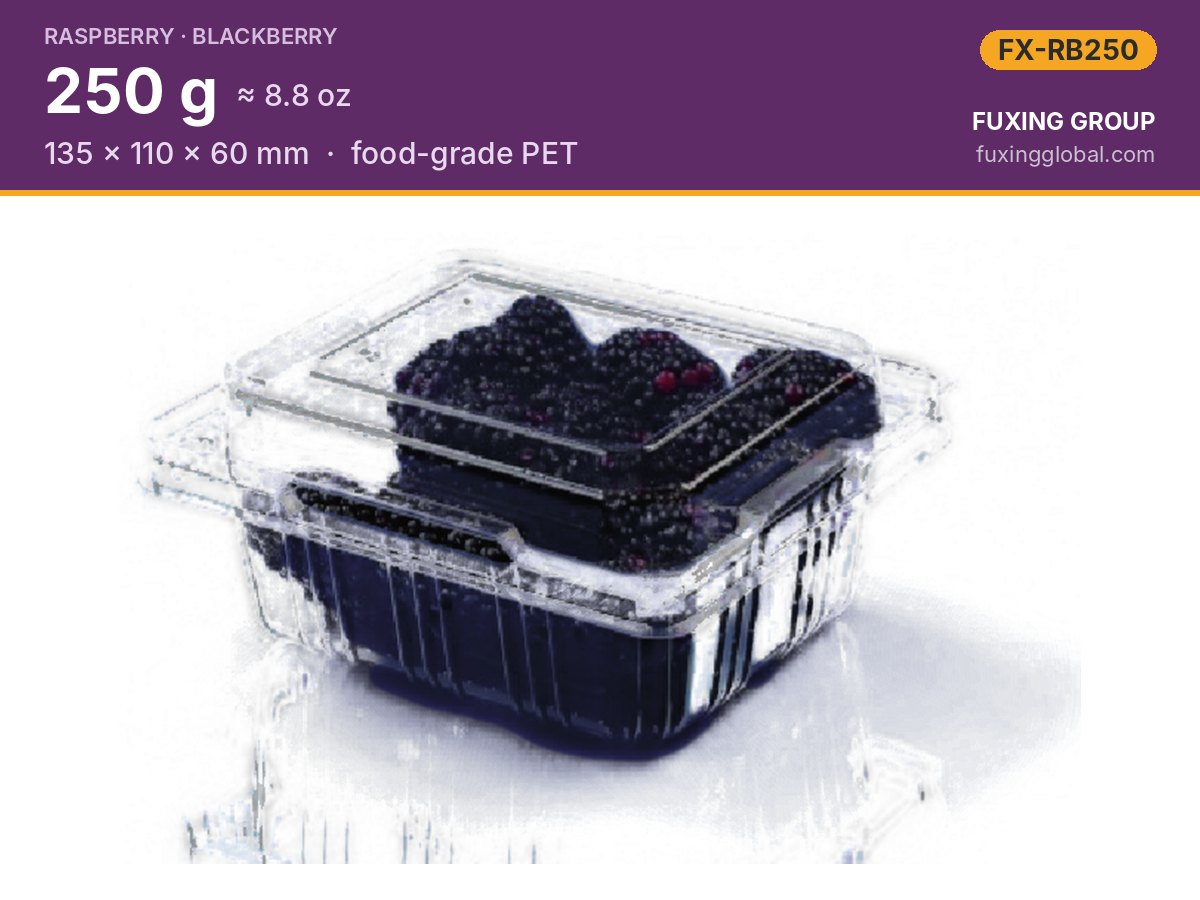
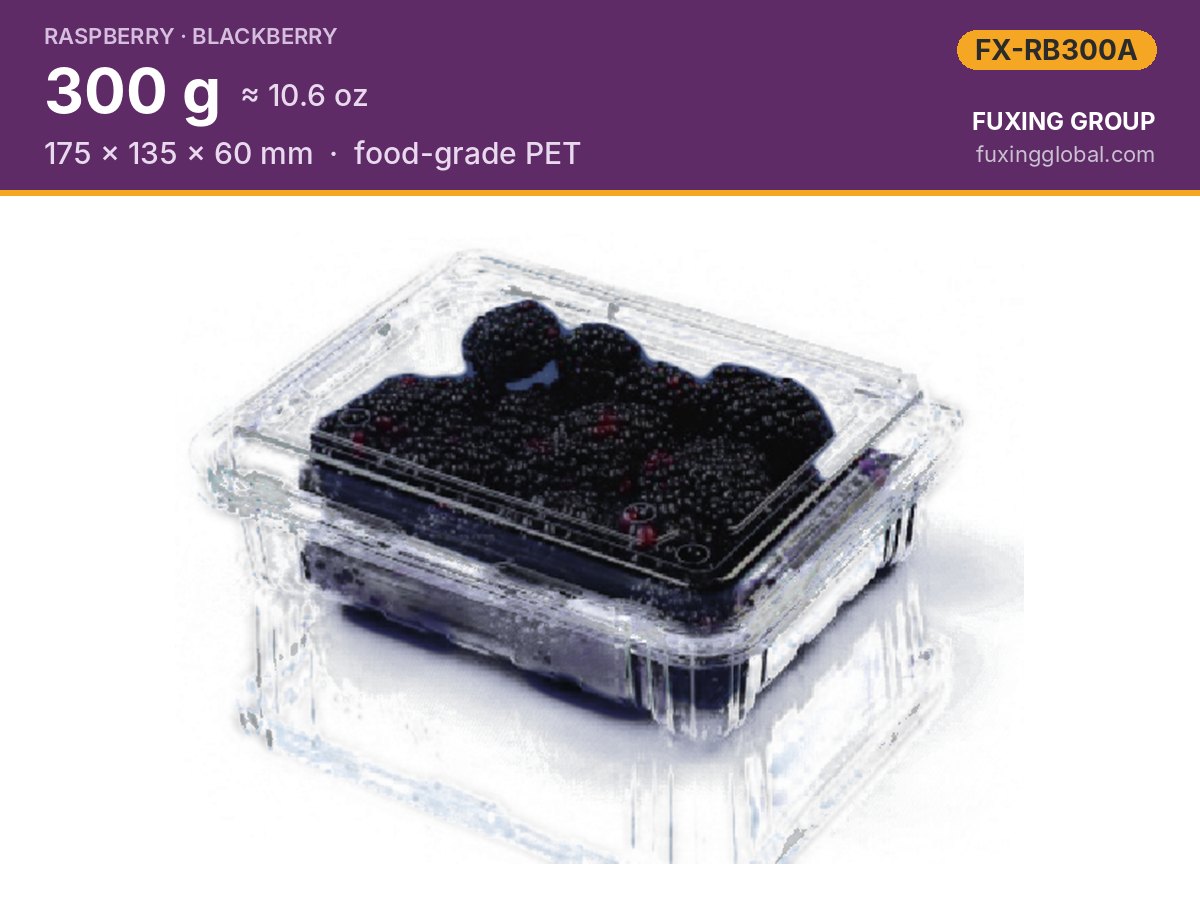
Shallow bodies so soft berries travel in one or two layers; twin-compartment packs for mixed-berry programmes.
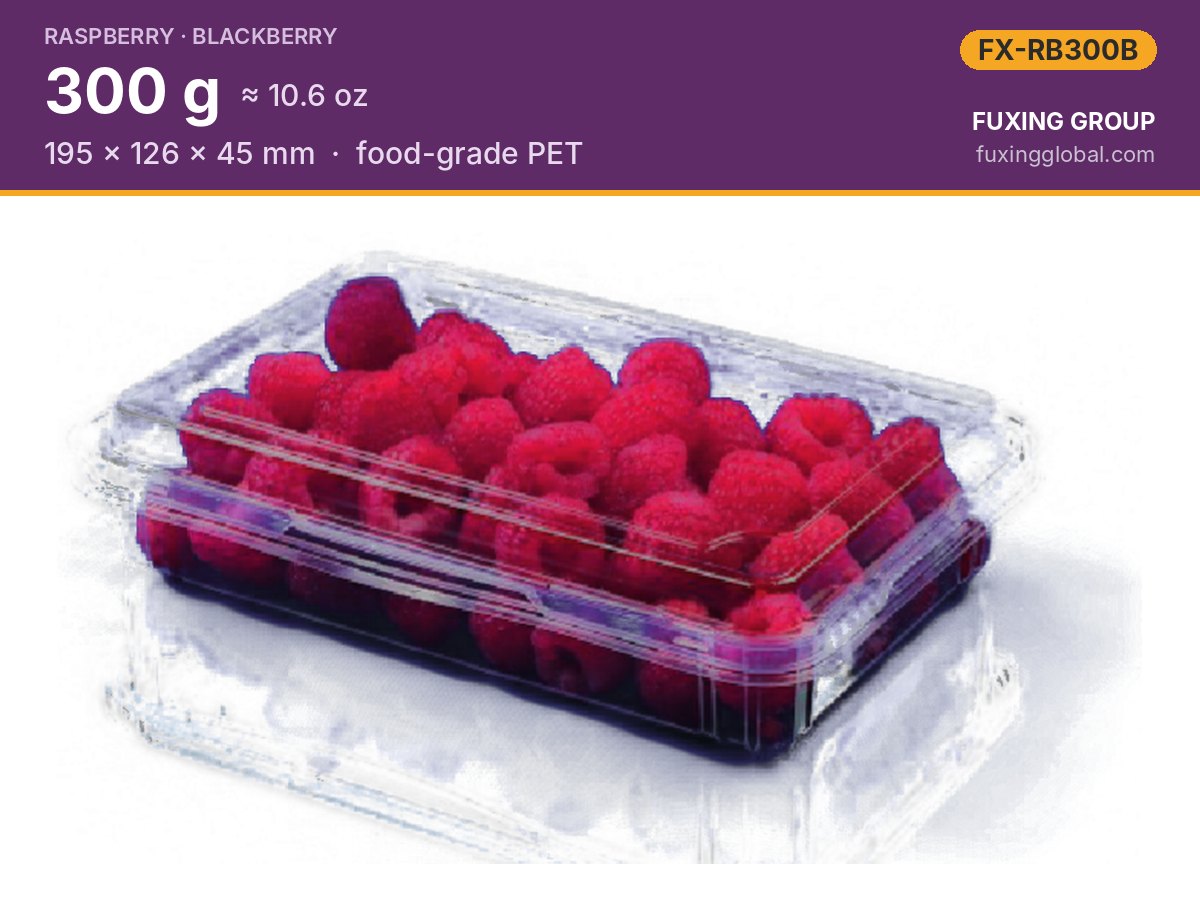
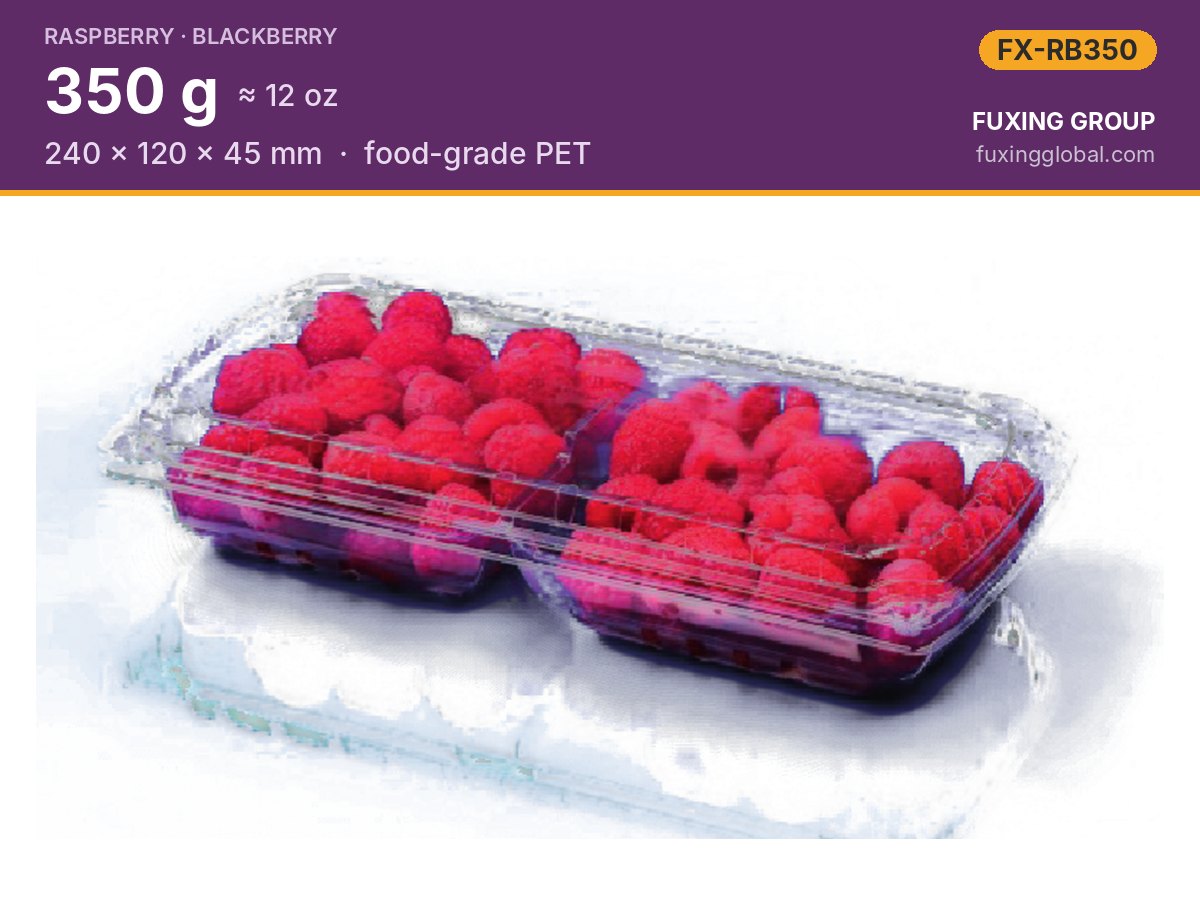
| Clamshell | Fuxing model | Clamshells per flat (typical) | Fruit per flat | Typical use |
|---|---|---|---|---|
| 125 g (4.4 oz) | FX-BB125A / FX-BB125B | 12 | 1.5 kg | Export standard to the U.S., Europe and China |
| 250 g (8.8 oz) | FX-BB250A / FX-BB250B | 8 or 12 | 2–3 kg | European retail, premium programmes |
| 500 g (≈18 oz) | FX-BB500A | 6 | 3 kg | Club stores |
| 2 × 250 g twin | FX-BB500B | 6 | 3 kg | Two varieties or blueberry + raspberry |
Typical trade configurations, not a standard: your receiver defines the flat, count and pallet. Need 6 oz (170 g), pint or an exact footprint? Send the drawing and we confirm mould availability before quoting.
| Origin | Blueberry shipping (approx.) | Close specification and order |
|---|---|---|
| Peru (La Libertad, Lambayeque, Ica, Piura) | August – December, peak September – November | May – June; top-up in August |
| Chile (central and south) | November – March | August – September; top-up in November |
| Mexico (Jalisco, Michoacán) | Mainly November – May | August – September (check IMMEX) |
Usually 12 × 125 g (4.4 oz) clamshells per corrugated flat, 1.5 kg of fruit. 250 g formats are typically packed 8 or 12 per flat and 500 g formats 6 per flat. The receiver's specification sheet sets the exact flat, count and pallet pattern.
Preliminary figures published by Fresh Fruit Portal (Agronometrics) put Peru's 2025 blueberry exports at 412,239 tonnes worth US$2.563 billion, up 17% in volume on 2024, to 66 markets; the United States remains the largest market and China reached a 10% share of value. Proarándanos reported a record 382.6 million kilos for the 2025/26 season.
Peru and Chile both have free trade agreements with China, and most plastic packaging enters duty-free with a certificate of origin. Confirm the HS line (normally 3923.10) and current status with your customs agent before ordering.
Allow production plus roughly 30 to 40 days of sea transit from South China to Callao or San Antonio, plus clearance. As a rule, close specification and order 10 to 12 weeks before first harvest and book a second shipment for the peak.
Yes. We manufacture the corrugated flats, trays and master cartons and the fruit bags, and can consolidate them with the clamshells in one container, with one supplier responsible for the clamshell fitting the flat.
Send: format (125 g, 250 g, 500 g), quantity per season, your customer's flat drawing or spec, first harvest date and port. We reply within 12 hours in English or Spanish.