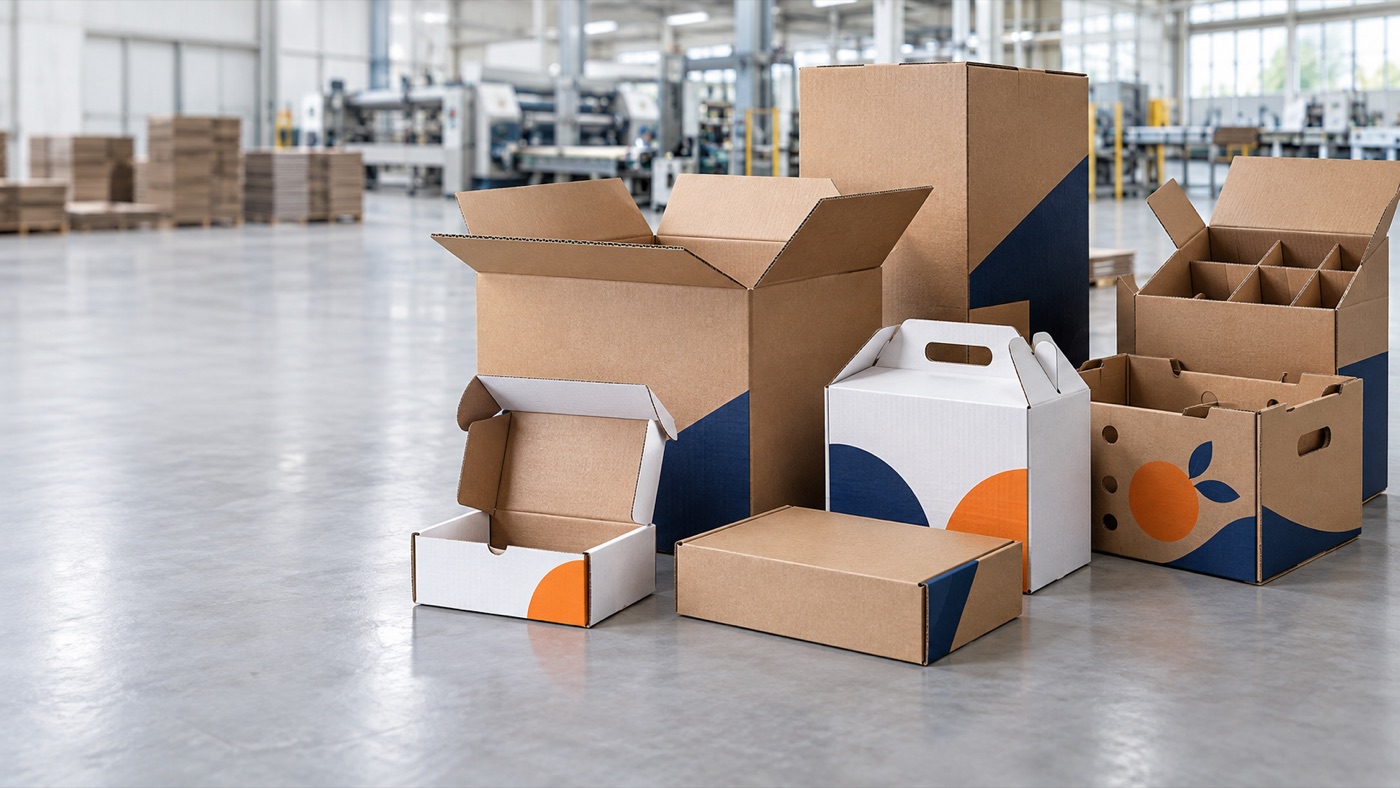
1. Identify the packed product and supply route
Start with what the box must do. A case for lightweight dry goods, a stacked industrial component and a moisture-exposed produce shipment may use the same nominal dimensions but require different board, joints, closures and tests. State the product, net and gross packed weight, whether the load supports itself, packing method, warehouse stack, pallet pattern, transport mode, destination and expected temperature or humidity exposure.
2. Control dimensions and box style
| RFQ field | What to state | Frequent source of error |
|---|---|---|
| Dimension basis | Inside or outside L × W × H, in millimetres | Comparing an inside-size quote with an outside-size sample |
| Box style | FEFCO code, dieline or marked physical sample | Using “regular box” for a die-cut, tray or telescopic format |
| Orientation | Which panel is length, width and height; flute direction if controlled | Rotating artwork or strength direction during redraw |
| Tolerance | Critical finished dimensions and agreed measurement method | Applying one tolerance to every score, slot and panel |
| Closure | Glue, stitch, tape or self-locking construction | Leaving joint and closure responsibility undefined |
3. Specify board by construction or performance
“Three-ply,” “five-ply” and flute letters are not complete strength specifications. If an approved incumbent construction exists, provide the liner and medium basis weights or supplier grade plus flute combination. If the supplier may engineer an alternative, state measurable requirements such as finished-box compression after agreed conditioning, edge-crush or board burst targets, water-absorptiveness limits where relevant, pallet stack and route trial. Do not treat a dry laboratory value as proof of humid or wet-route performance.
4. Define print and converting details
- Supply the controlled dieline and vector artwork with revision code.
- List each spot color or approved color reference, coverage and varnish requirement.
- Identify barcodes, QR codes, small legal copy and registration-sensitive panels.
- State slot, vent, hand-hole, perforation and die-cut requirements on the drawing.
- Identify the glue or stitch joint, closure and any tape or label applied by the packer.
- Approve content and scannability on a physical production-representative sample.
The Calamba plant's documented K6-1200 × 2400 line has three-color flexographic printing plus varnishing, vacuum transfer, slotting and rotary die cutting. The equipment contract lists a maximum feed of 1180 × 2400 mm and maximum print area of 1150 × 2400 mm. These are machine-envelope figures, not promises that every finished box or artwork fits; blank orientation, allowances, tooling, board and print layout still require engineering review. Management also reports a 16-head digital printer, folder-gluer, standalone die cutter and stitcher.
5. Make quantities comparable
List forecast and order quantities by SKU and artwork version, not one combined annual number. Ask the supplier to separate recurring unit price, one-time tooling or plate charges, sample cost, packing, pallet, delivery and taxes. MOQ, lead time and daily output should be confirmed after the exact material, print route, tooling and production sequence are known.
| Commercial input | Buyer entry | Supplier response |
|---|---|---|
| Quantity | Initial, monthly and annual units by SKU | MOQ, price breaks and over/under-run rule |
| Sample | Plain, printed or production trial; quantity and approval date | Method, cost and dispatch date |
| Packing | Bundle count, pallet footprint/height, labels and protection | Packing configuration and units per pallet/truck |
| Delivery | Exact site, receiving hours, unloading and call-off pattern | Incoterm/delivery basis, lead time and exclusions |
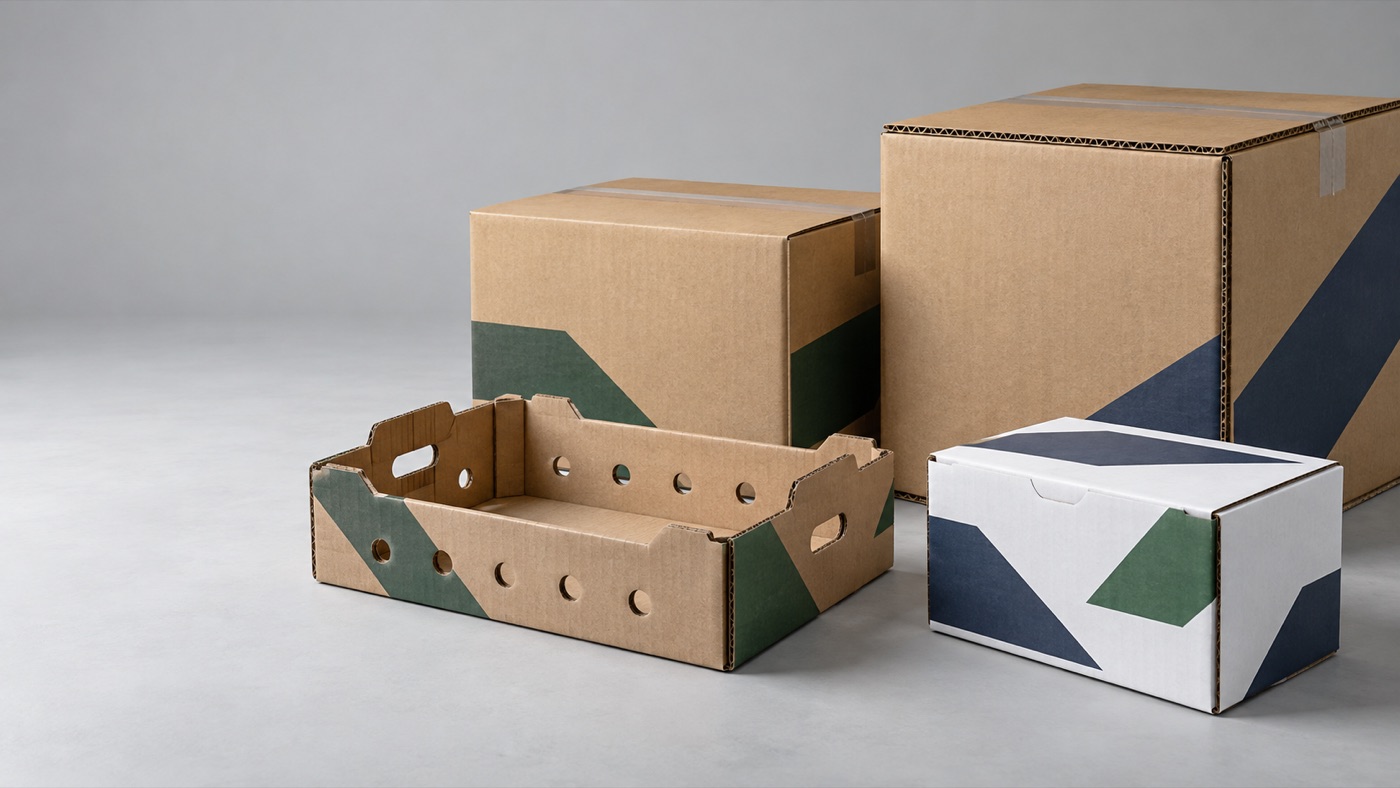
6. Use an approval gate before production
- RFQ gate: all bidders receive the same drawing, use, route and commercial inputs.
- Engineering gate: the proposed board, flute, print, joint and tolerances are recorded with exceptions.
- Sample gate: fit, assembly, print, barcode and pack-line handling are signed against a revision.
- Performance gate: agreed conditioning, compression, packed-product or transport trials meet defined acceptance rules.
- Release gate: purchase order, specification, inspection plan, pallet method and delivery schedule match.
Copyable RFQ brief
PEZA and VAT: quote the transaction, not a slogan
Double Philippine Packaging Products Corporation is presented in supplied records as a PEZA-registered export enterprise in Calamba Premiere International Park – Special Economic Zone. Its registered activity covers the manufacture, assembly and printing of corrugated paper, plastic and other packaging products. A supplied VAT-zero certificate is valid for a stated 2026 period and remains transaction-specific. It should not be interpreted as a blanket promise that every local or export order is tax-free. The legal entities, registered activity, buyer status, documentary conditions and current treatment must be checked for the actual order.
Frequently asked questions
Can I request “the cheapest three-ply box”?
You can, but the quotes may not describe equivalent boxes. Add packed weight, stack, route, dimensions, print and acceptance requirements so cost is compared against the required outcome.
Can Calamba make custom sizes and styles?
The plant supports various styles, flute constructions and sizes subject to blank layout, equipment envelope, tooling, board availability and approved drawing or sample.
Does a machine speed equal promised daily output?
No. The contract lists a mechanical maximum up to 250 pieces per minute for the main line, but real output depends on size, board, print, die cutting, changeovers, downstream operations, quality controls and schedule. The quotation must confirm capacity for the exact SKU.
What is the fastest way to obtain a useful quote?
Send one priority SKU with a physical sample or dieline, inside dimensions, board/performance requirement, artwork, monthly quantity, delivery point and target date. Missing fields should be listed as explicit assumptions.
Send one carton SKU for engineering review
Attach the drawing or current sample, dimensions, packed weight, stack and route, print file, quantity and delivery point. The reply will identify the proposed plant and quote assumptions.
Request a Calamba carton quote →