
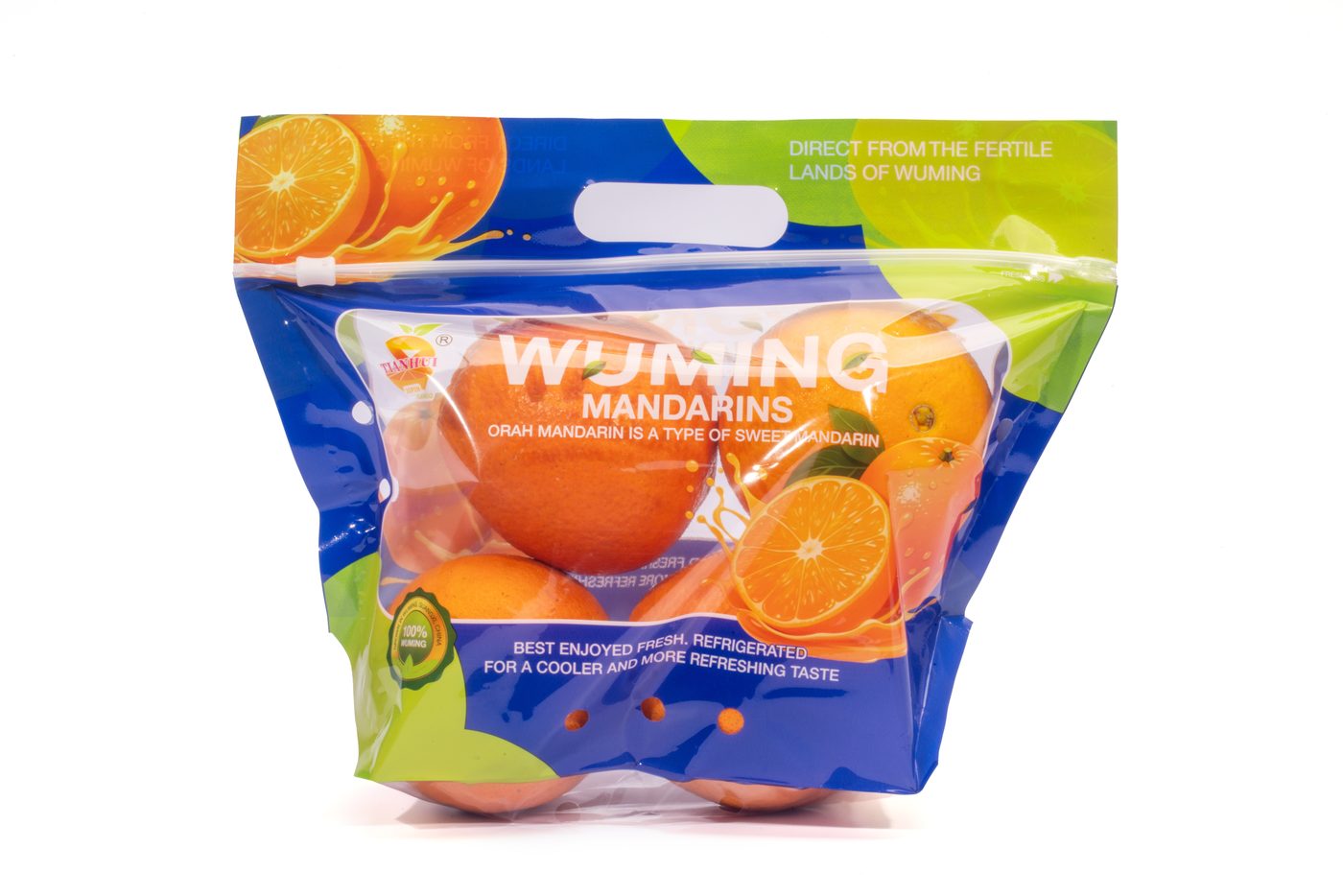
Every week we quote produce bags for growers and importers who ask for "PE bags" out of habit — when a different film would sell more fruit or cost less. Here is the comparison table our sales engineers actually use.
| Film | Clarity | Feel & strength | Typical use | Relative cost |
|---|---|---|---|---|
| PE (polyethylene) | Good, slightly hazy | Soft, stretchy, tough | Everyday vegetable bags, banana cluster bags, liner bags | $ |
| PO (polyolefin blend) | Very good | Crisp yet tear-resistant | Supermarket fruit bags, wicketed bags for packhouse lines | $$ |
| CPE (cast PE) | Matte, frosted look | Soft, premium hand-feel | Premium fruit gift bags, frosted zipper bags | $$ |
| OPP (oriented PP) | Glass-clear | Stiff, crinkly, lower tear resistance | Retail display bags, stand-up pouches with print | $$ |
| POF (polyolefin shrink) | Excellent after shrink | Thin, strong shrink film | Tray overwrap, multipack shrink bundles | $$ |
Crop, variety, respiration, harvest condition, temperature, humidity, wash process, route and retail format all affect film choice. Micro-perforated PE/PO, clear OPP or PO pouches, banana cluster/liner formats and heavier PE or mesh combinations are useful starting points—not universal prescriptions. Compare candidate packs in a representative shelf-life and distribution trial.
Choosing mesh instead of film? Our mesh produce bags guide covers raschel vs leno construction, the export size chart and why grams per bag — not nominal size — sets the price.
Hole size, count, distribution and film permeability affect gas exchange and moisture loss. Define the crop, fill weight, starting condition, temperature profile, route and shelf-life target, then measure the candidate pack rather than approving perforation from a generic crop label.
Anti-fog additives or coatings may improve visibility under some temperature and humidity conditions. Test the proposed film, treatment and packed product through the actual cooling and retail cycle.
Do not rely on a blanket “food grade” claim. Request material and ink declarations, test or compliance records and traceability matched to the exact resin, additives, print, SKU, plant, intended contact condition and destination requirement. Verify current site certificates separately on the certificates page.
Browse the full range with photos on our produce packaging bags page, including zipper bags, stand-up pouches, wicketed bags and vented fresh bags.
Send the crop, pack weight, temperature profile, route and destination for a candidate specification and validation plan.